Deevid AI vs HeyGen: which one should you pick?
These two tools keep showing up in the same Google searches, but they're solving different problems. HeyGen builds avatar-led talking-head videos from a script, great for explainers and sales demos. Deevid generates scenes, B-roll and narrative shots from prompts and stills. If you've been trying to pick between them, the real question is which output you actually need.
What Deevid AI and HeyGen actually look like.

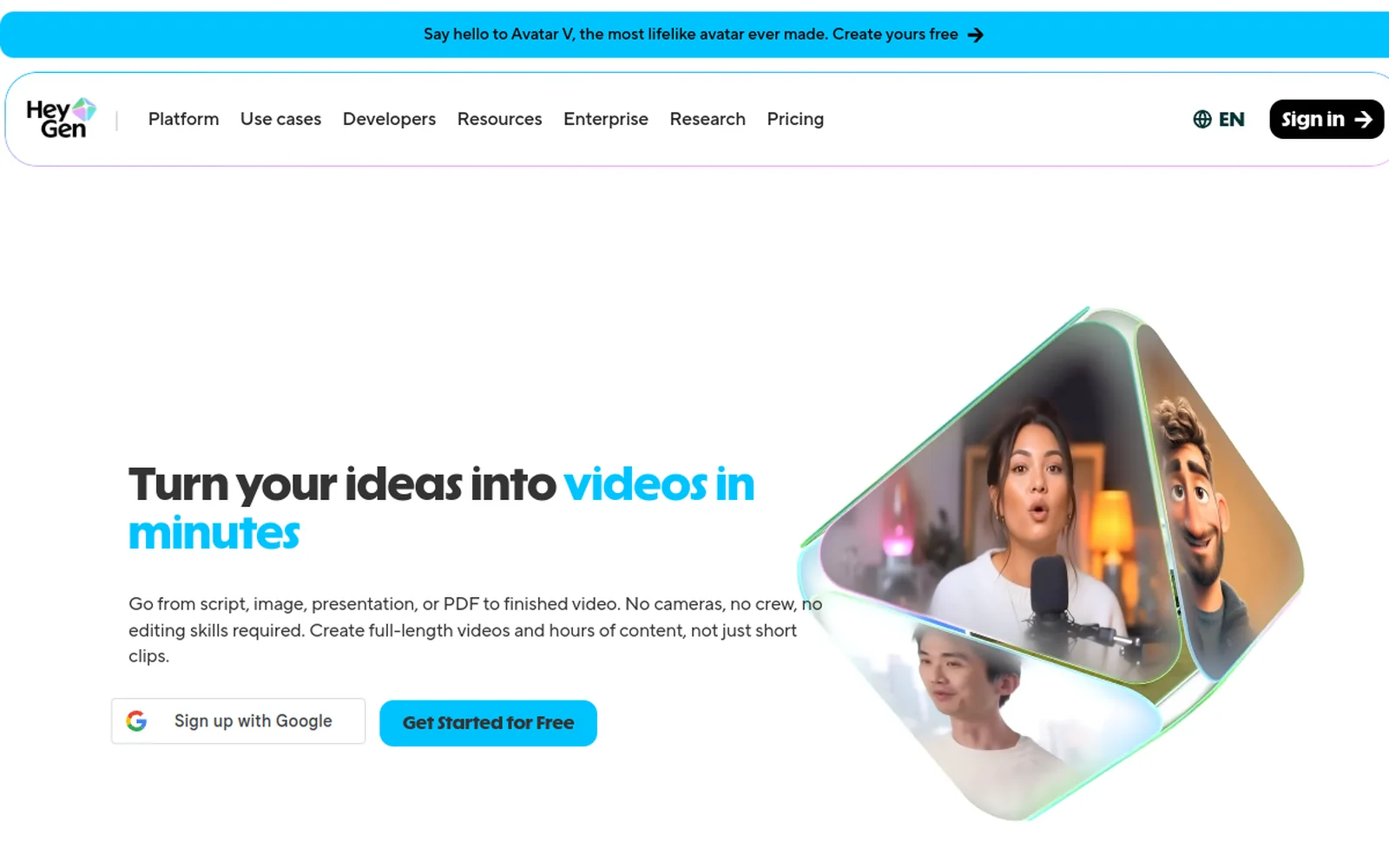
Deevid AI vs HeyGen, side by side.
We used identical prompts, identical briefs, and identical acceptance criteria for both tools. Here are the raw specs.
| Criteria | Deevid AI | HeyGen |
|---|---|---|
| Starting price | $10/mo | $29/mo |
| AI models bundled | ✓ 14+ (Sora 2, Veo 3.1, Kling, Runway, Pika…) | Avatars + voice clone: no generative scene models |
| Max resolution | 1080p | 1080p |
| Character consistency | ✓ All paid tiers | ✓ |
| Commercial license | ✓ All paid tiers | Standard+ |
| Watermark on paid | ✕ | ✕ |
| AI music + voice + image | ✓ Pro and Premium | ✕ |
| Our score | 9.2 / 10 | 8.4 / 10 |
Which categories Deevid beats HeyGen in.
Each row is a category we tested. The winner column is our call, supported by the side-by-side notes.
Test Deevid against HeyGen yourself.
Deevid ships 20 free credits on signup: no credit card required. HeyGen offers a free tier to test too.
When to pick Deevid AI over HeyGen.
- You need generated scenes, product motion, or B-roll, not a person reading a script.
- You want multiple frontier models ($10 buys you Sora 2, Veo 3.1, Kling, Runway, Pika in one tool).
- You're producing social content, ads or cinematic shots where a talking avatar would feel off.
- Your budget is $10-25/mo and you want output variety, not avatar runtime.
- Your deliverable is specifically a talking-head video: explainer, training, sales demo, multilingual announcement.
- You need automatic lip-sync translation into 40+ languages. HeyGen is category leader here.
- You have a script and need it read on camera by a consistent presenter, not scenes generated around it.
- You're a corporate L&D team standardizing on one avatar platform.
Deevid vs HeyGen: the fine print.
Why "HeyGen vs Deevid" is a misleading comparison
Search interest for 'HeyGen vs Deevid AI' is rising, but the two tools barely compete on deliverables. HeyGen's core product is an avatar reading a script, the category it invented. Deevid AI is generative video: prompt in, original scene out. A HeyGen output and a Deevid output are almost never substitutes for each other in a real brief. If you're producing training videos, multilingual explainers, or talking-head sales demos, Deevid can't replicate that. If you're producing narrative shots, product motion, or stylized B-roll, HeyGen structurally can't produce it. The real comparison most creators should be running is 'which of these outputs does my current project need?', then the tool choice is automatic.
Credit economics: where HeyGen's 200 credits actually go
HeyGen's Creator plan at $29/mo gives 200 credits, but the math gets dicey once you look at Avatar IV, their premium avatar product, which burns 20 credits per minute. That's only 10 minutes of premium output per month before overage. Overage packs cost $15 for 300 additional credits. Deevid's Lite tier ($10) gives 200 credits that translate to roughly 40 standard-quality video generations (~5 credits each) across any of 14+ models. The unit economics diverge by a factor of 3-4× once you account for generation type. If your use case is 10 minutes of high-polish avatar video per month, HeyGen Creator is priced for that. If it's more than 10 minutes, budget for overage, or evaluate whether you actually need Avatar IV versus HeyGen's lighter avatar modes.
Multilingual lip-sync: the feature HeyGen actually owns
One area where HeyGen has a genuine moat is lip-sync translation. Upload a video in English, pick a target language from 175+ options, and HeyGen generates a new video where the presenter's mouth movements actually match the translated audio, not dubbed, re-rendered. This is a workflow unlock for global brands, multilingual training teams, and creators re-packaging English content for non-English audiences. Deevid doesn't compete in this space at all. If multilingual deliverables are a core part of your pipeline, HeyGen earns its price, and almost nothing else on the market (Synthesia is the only real alternative) can match it.
HeyGen vs Deevid: the honest summary.
Deevid AI
- 14+ frontier video models on one subscription
- Original generated scenes, not avatar playback
- Starts at $10/mo with commercial rights
- Credit math works out 3-4× better per video
- No avatar / talking-head output
- No built-in multilingual lip-sync translation
- Learning curve is higher than HeyGen's script-in, video-out flow
HeyGen
- Best-in-class multilingual lip-sync (175+ languages)
- Avatar IV quality has reached near-uncanny in 2026
- Mature enterprise workflows (brand kits, approvals)
- Clear script-to-video pipeline with zero prompt craft needed
- Creator plan at $29 caps at ~10 min of premium avatar/month
- No generative scene or B-roll output
- Overage credits cost real money once you scale
Your questions about Deevid vs HeyGen.
How does Deevid AI compare to HeyGen?
Why do users choose HeyGen over Deevid AI?
Is Deevid AI better than HeyGen?
What does Deevid AI offer that HeyGen does not?
Does HeyGen have a free plan?
Can I use HeyGen and Deevid AI together?
Which is cheaper per video?
Does HeyGen support Sora 2 or Veo 3.1?
Deevid AI vs HeyGen in action.
The verdict: Deevid AI vs HeyGen.
This isn't really a head-to-head, it's two tools in different jobs-to-be-done. HeyGen wins if you need a person reading a script on camera, especially multilingual. Deevid wins for everything else a camera could have filmed. If you're picking between them, you're probably not clear on your output yet, decide that first, then the tool choice is automatic.Marcus Hale, after 30 days with both tools
Try Deevid AI free.
20 free credits on signup, no credit card required. Cancel anytime on paid plans.
Claim 20 free credits →