Short answer: there is no single replacement for Tagshop AI, because the tools it gets compared with do different jobs. Pick by job. Creatify when you want many ad variants from a product URL, MakeUGC when you want the cheapest first month, Arcads when one actor has to look real, HeyGen for avatars and translation with a free plan, and Higgsfield when you want generated scenes from many models rather than a talking person. Tagshop AI itself is a URL-to-ad platform billed in credits per second. It is not ranked here, since the public pages give prices and features rather than comparable results, and every price below was read on the vendors’ own pages on October 31, 2026.
Analysis based on Tagshop AI’s official pages, read on October 31, 2026. This page contains affiliate links (disclosure).
Start with the free credits, on one real script. Tagshop AI gives 5 credits once, with a watermark on video, and says no card is needed. Plans start at $29 a month, or $14 a month billed yearly.
Why look for a Tagshop AI alternative?
Tagshop AI is new in our coverage, and its public pages raise four reasons to compare before paying. They are not complaints about the product. They are questions the pages leave open:
- You cannot see the output before paying much. The free plan is 5 credits, once: one image, or a 4-second watermarked clip.
- Cost per ad is hard to predict. Credits are charged per second, by model and resolution. A 30-second clip is 12 credits in the cheapest model and 39 in the recommended one, so “up to 5 videos” on the $29 plan is a best case.
- Refunds are narrow. Nothing back on monthly plans, and a 3 to 7-day window on annual plans, only if no credit has been used.
- Your job may not be URL-to-ad. If you need one very natural actor, translated training videos or generated B-roll, another kind of tool fits better.
Our Tagshop AI review goes through the pricing and the credit table in detail. This page is for the next step: what else to put on the shortlist.
The short list, by job
| Tool | Best for | Free option | Entry price on its page |
|---|---|---|---|
| Tagshop AI | Product URL to ad, with an AI Video Agent | 5 credits once, watermark | $29/mo ($14 yearly), 50 credits |
| Creatify | Many ad variants from a product URL | 10 credits a month, watermark | $15/mo ($10 yearly), 55 credits |
| MakeUGC | Cheap first month, large actor library | “Try any plan for $1” | $29/mo billed yearly, 500 credits |
| Arcads | One realistic actor for a flagship ad | Free trial (3 days in our October check) | From $110/mo in our September check |
| HeyGen | Avatars, translation, general video | Free plan, 3 videos a month | $29/mo (Creator), 600 credits |
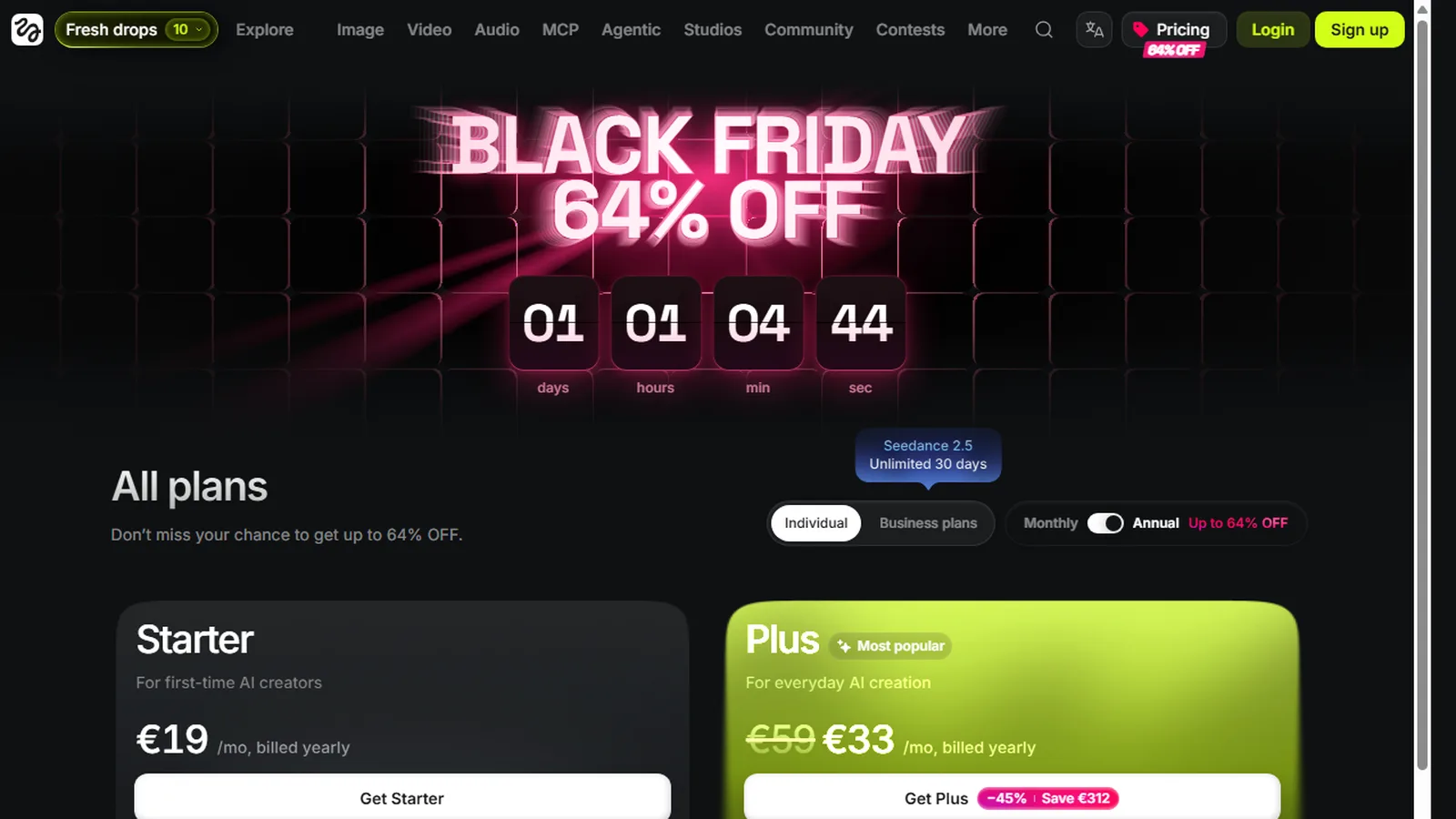
| Higgsfield | Generated scenes from many models | Free plan with 0 credits | $19/mo (Starter), 270 credits |
Read the last column with one warning: each vendor counts differently. Tagshop, Creatify, MakeUGC, HeyGen and Higgsfield sell credits; Arcads sells videos. A credit is not a video, and it is not the same thing from one tool to the next.
Where does Tagshop AI itself fit?
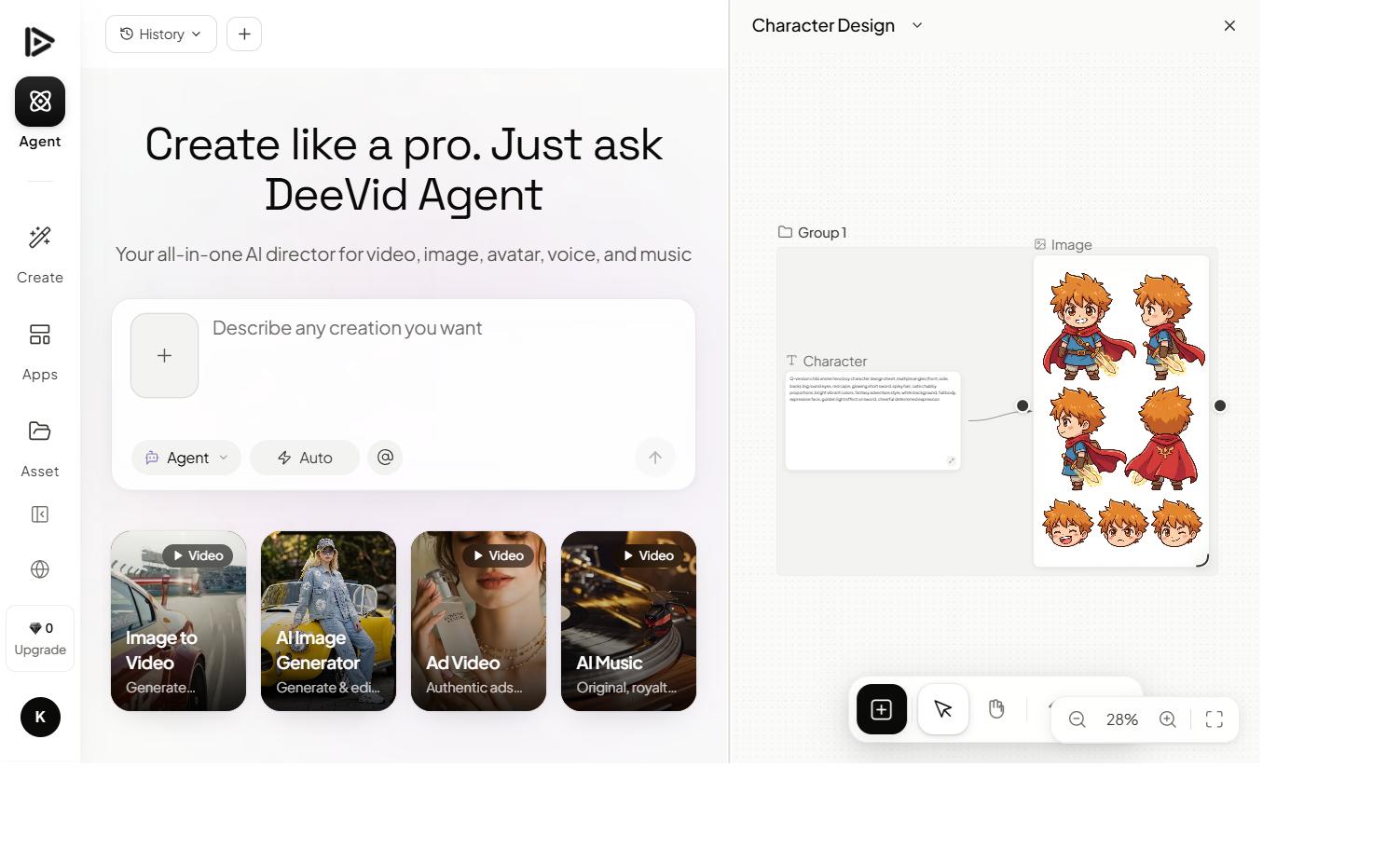
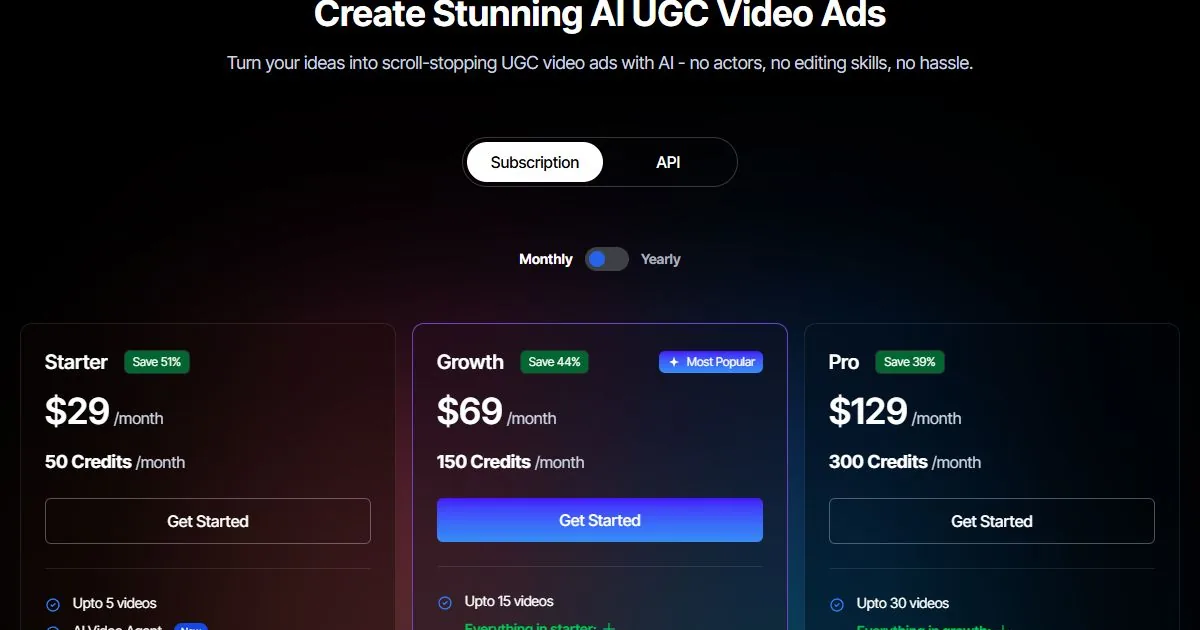
Before the alternatives, a fair description of the tool they are compared with. Tagshop AI is built around a chat. You paste a product URL or describe an idea, an AI Video Agent asks about the brand and the message, and you receive a video with script, avatar, voice, scenes and subtitles. It lists 300+ avatars, a digital twin of yourself, 75+ languages, an Ad Clone feature and a long list of video models. On the pricing page, Starter is $29 a month for 50 credits ($14 yearly), Growth $69 for 150 and Pro $129 for 300.
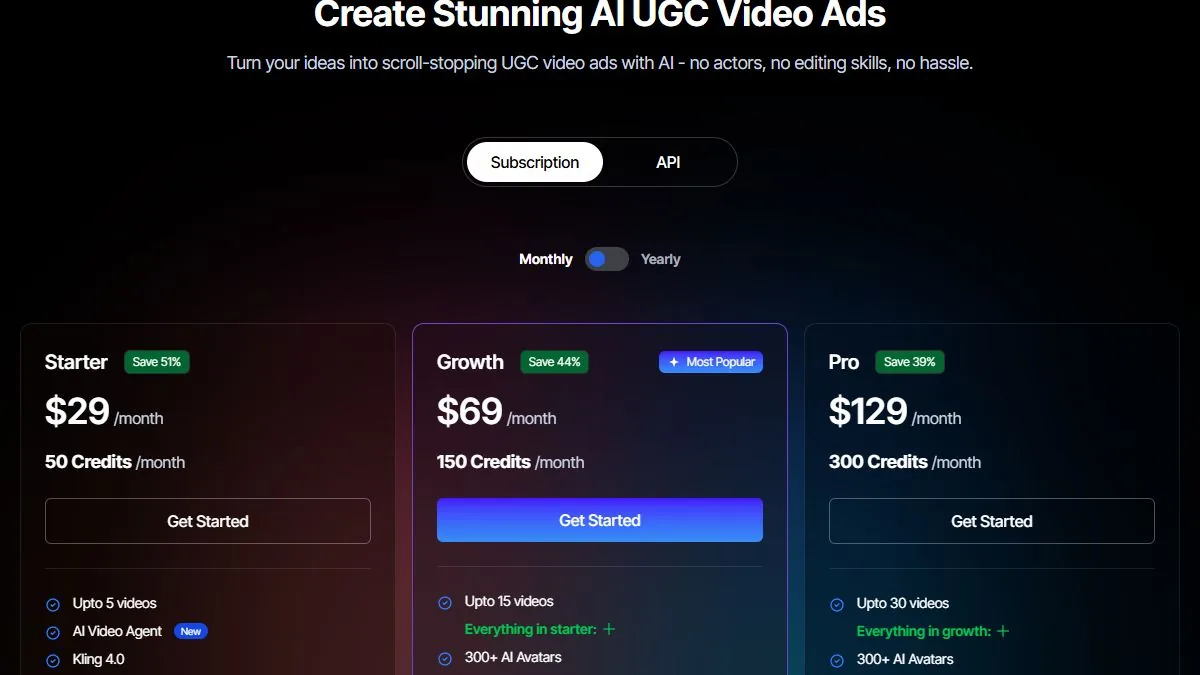
Where it looks strongest on paper: the credit table is public, so you can compute a cost before signing up, and paying yearly cuts the price per credit roughly in half. Where it is weakest on paper: the free plan is tiny and the refund rules are strict. Where the pages say little: output realism, French voice quality and render samples. If you land here first, the full review has the details.
1. Creatify: many variants from a product URL
Creatify is the closest cousin to Tagshop in workflow. You give it a product link, it pulls the images and the copy, writes a script, puts an AI actor in front of it and gives you a video you can multiply into variants. Its pricing page, read on October 31, 2026, lists a free plan (10 credits a month, up to 2 video ads or 20 image ads, watermark, 300 AI actors) and paid plans from Standard at $15 a month ($10 billed yearly, 55 credits) through Pro at $55 ($38 yearly, 280 credits) to Max at $95 ($66 yearly, 730 credits). Pro adds 1,500 actors, three custom avatars, videos up to 10 minutes, Ad Clone, an Ad Agent and a competitor ad tracker over Meta ads.
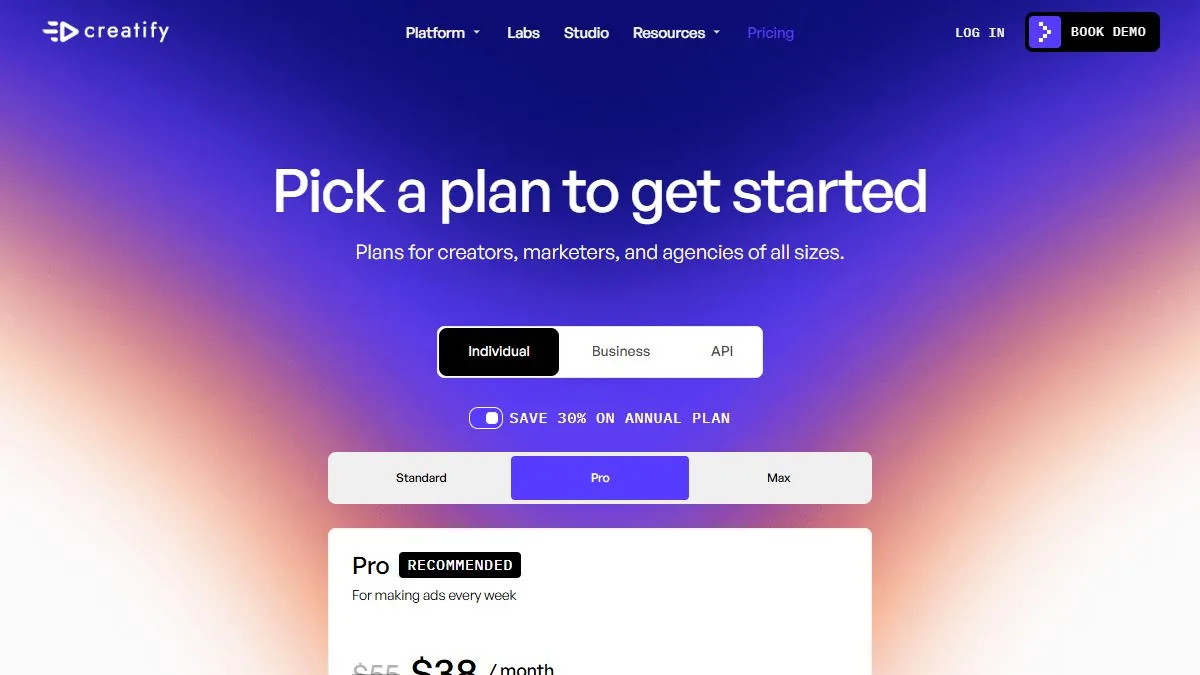
Choose it if you test many hooks on a catalog and want a permanent free plan to try the workflow. Skip it if one very polished ad matters more than volume. We keep a Creatify AI review and a longer list of Creatify alternatives with different tools by job. You can look at Creatify’s free plan yourself.
2. MakeUGC: the cheapest way to try a plan
MakeUGC is a newer name that sells AI UGC with a different hook: “Try any plan for $1”. Its pricing page shows Starter at $29 a month billed yearly (500 credits a month, 300+ actors, 50+ languages, 480p and 720p export), Growth at $39 (1,000 credits, 500+ actors, HD, 2K and 4K export, one custom avatar) and Pro at $79 (2,000 to 5,000 credits, 1,000+ actors, three custom avatars). The annual toggle is marked as saving 51% on Starter and Growth. Enterprise is on quote.
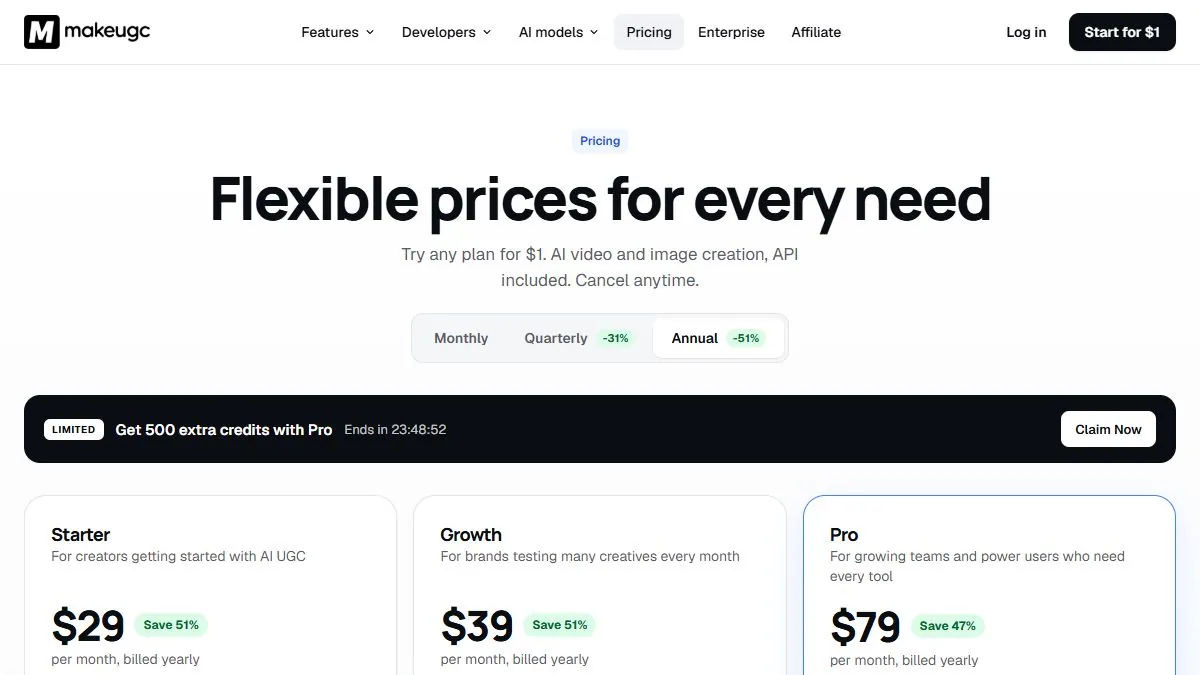
The page shows annual prices by default. We did not read a monthly price, so check it if you do not want a year. The $1 offer is not a free plan: it is a paid entry for the first period. Read what happens after it, and cancel before the renewal if you only wanted to test. We have no review of MakeUGC, so this is a pricing-page summary, not a recommendation.
Choose it if you want to test several tools for almost nothing and need big actor libraries. Skip it if you want a permanent free plan to compare on. Its page lists no per-ad cost, so run a real script through it before comparing it to Tagshop.
3. Arcads: when the actor has to look real
Arcads is the name that comes up whenever realism is the issue. Its homepage on October 31 advertises a free trial, a library of 1,000+ AI actors and the option to create your own avatar, plus editing tools such as captions, actor swap and translation, and a “workflow” canvas for teams. It does not publish a price list on the homepage.
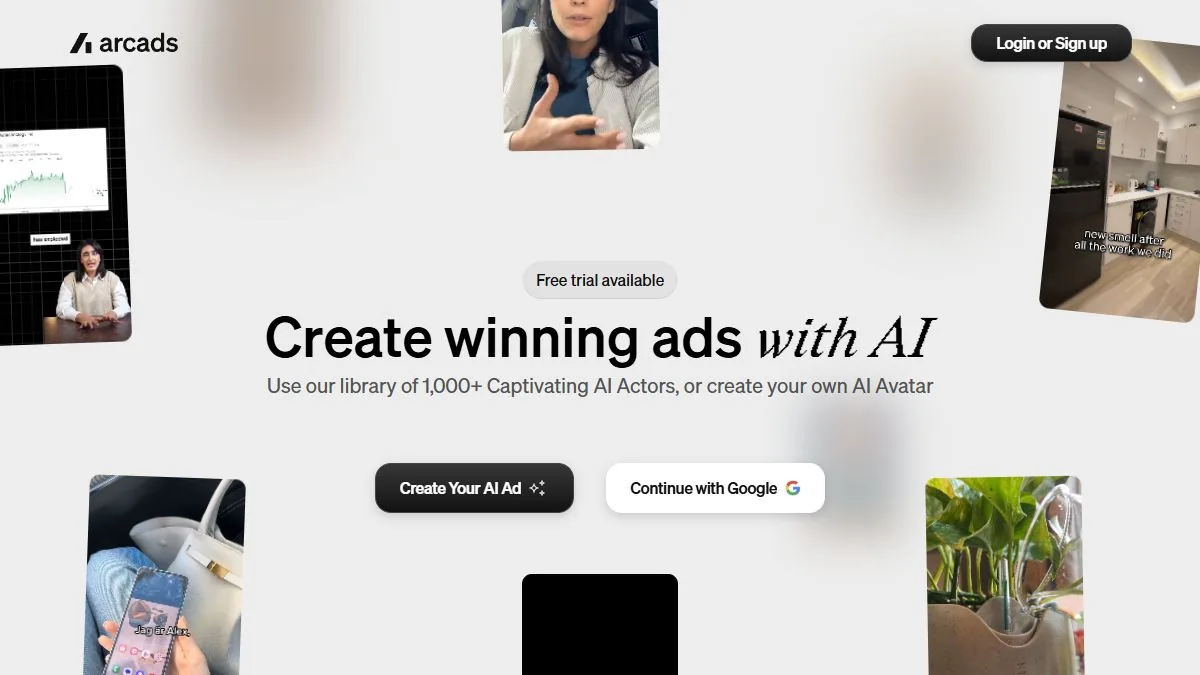
In our Arcads review we reported plans from $110 a month for 10 videos in September and a 3-day trial seen on October 25. The trial limits and the plans may have changed since, so treat those figures as a reference point and confirm them in the app. If you want to see the actors, Arcads’ free trial is the quickest check.
Choose it if your output is a person talking to the camera and a stiff delivery would cost you clicks. Skip it if you want dozens of cheap variants, since the per-video price is what you pay for realism.
4. HeyGen: avatars and translation with a free plan
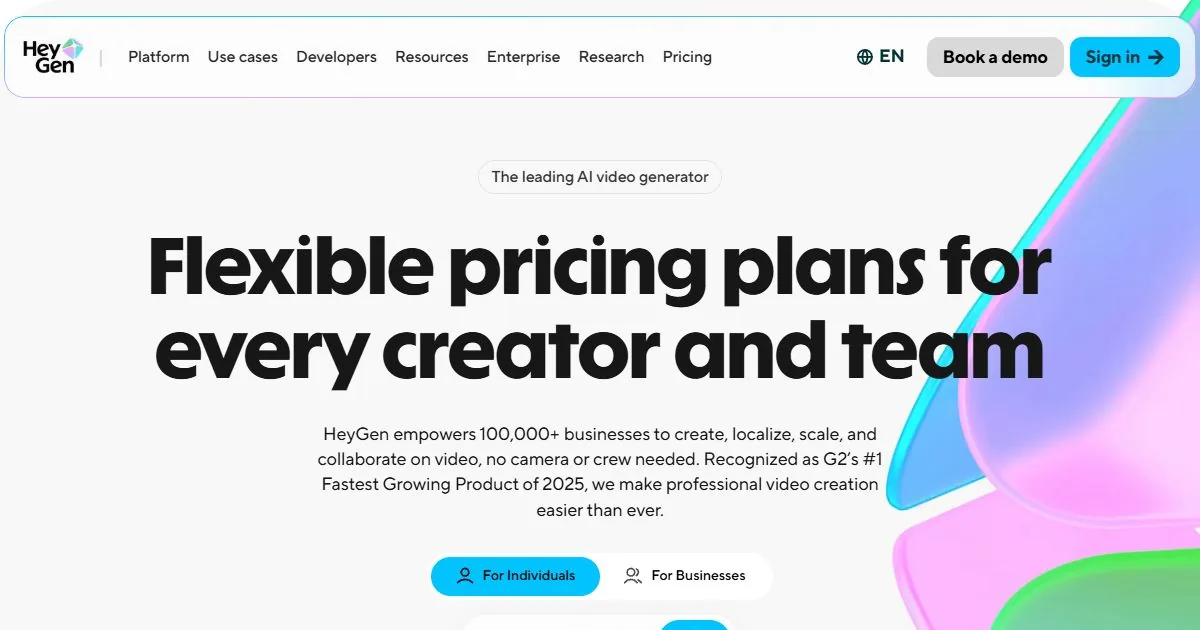
HeyGen is a general avatar and translation platform, not an ad factory. Its pricing page on October 31 lists a Free plan at $0 (3 videos a month, up to 1 minute each, watermarked, access to Avatar IV and the Video Agent, one custom video avatar and 500+ presenters, 30+ languages), Creator at $29 a month (600 credits, 1080p, HeyGen branding removed, a custom avatar with your voice and likeness, 175+ languages and dialects) and Pro at $49 a month (1,000 credits, 4K export, Seedance 2.5 and cinematic avatars).
Choose it if you want a talking presenter, translation or a free way to test an avatar before spending anything. Skip it if your workflow starts from product URLs and ad templates. The page does not say how many minutes a credit buys, so use the free plan to measure it. The HeyGen and MakeUGC links on this page are the vendors’ own and carry no tracking.
5. Higgsfield: a model hub, not a UGC tool
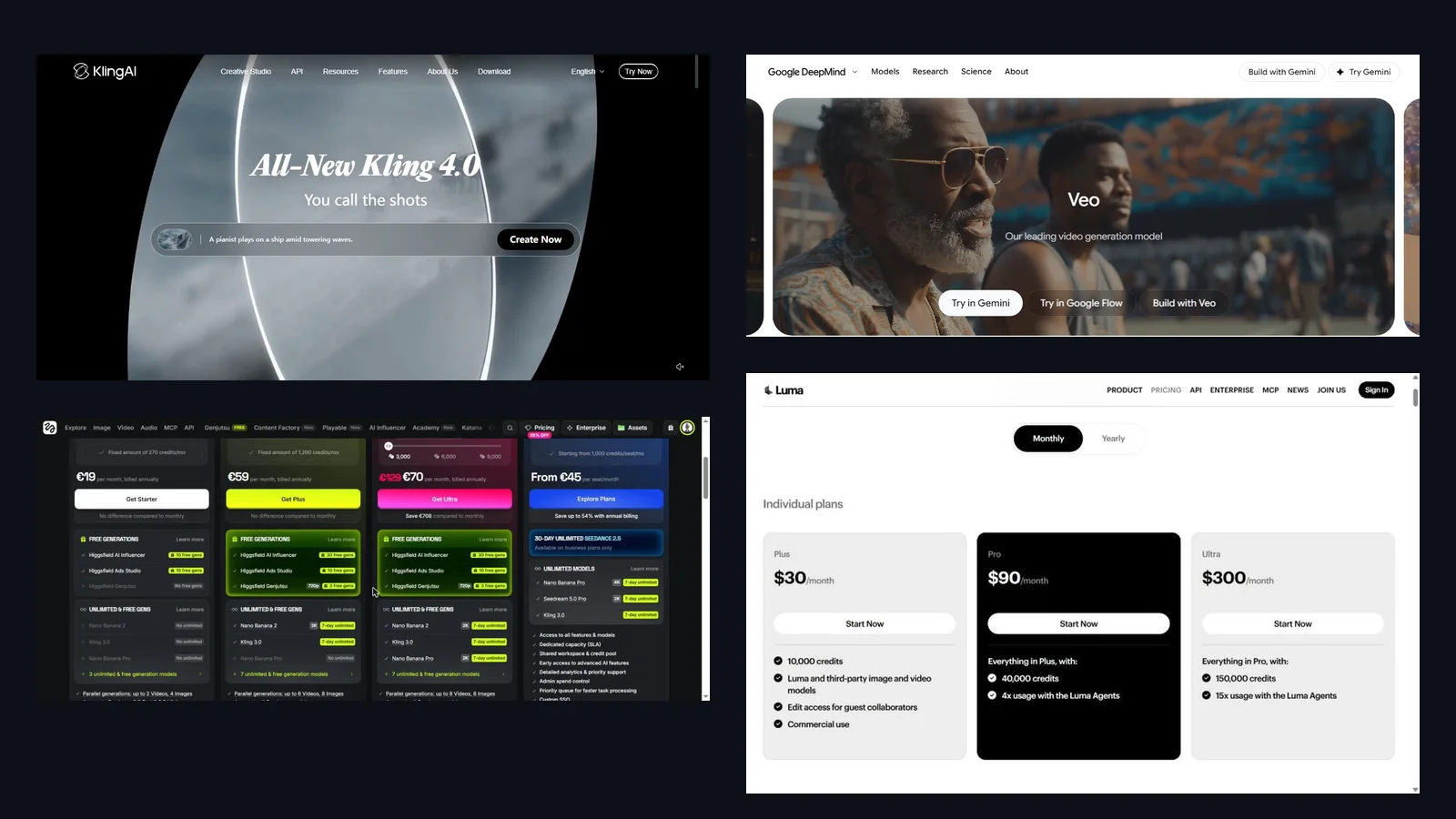
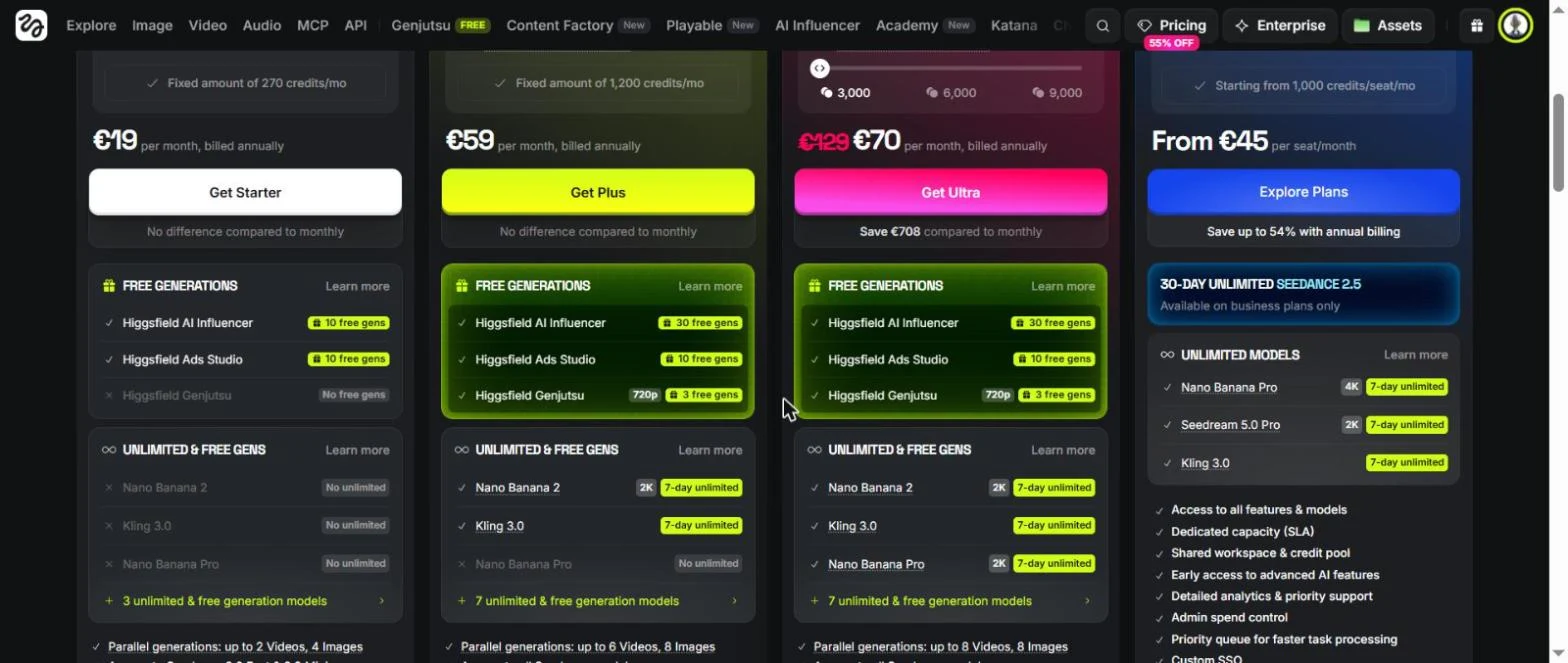
Higgsfield belongs on this list for a different reason. It is not a dedicated UGC tool: it is a hub with one credit balance for Kling, Seedance, Veo, Wan and image models, plus modules such as an AI influencer tool and an Ads Studio that we did not test. We reviewed it on a real account in October, and the Higgsfield review has the credit prices we saw: a 5-second Kling 3.0 clip at 7.5 credits and a 5-second Seedance 2.5 clip with sound at 35, with plans from $19 a month for 270 credits.
A “UGC builder” feature shows up in some search results, but we have not verified it, so we do not claim it. Choose it if you want generated scenes and B-roll to cut around a presenter, or to compare models on one balance. Skip it if you need an avatar to read your script, which is the job of the others. You can check Higgsfield’s current plans on its own site.
What does an AI UGC ad cost, really?
Monthly prices compare badly because every vendor counts differently. Tagshop and Higgsfield charge per second of generated video, by model. Creatify, MakeUGC and HeyGen sell monthly credit pools without a public per-ad table. Arcads sells videos. To compare, convert everything to the cost per usable ad: the plan price divided by the number of ads you would actually publish.
Here is the only per-second table we could build, from Tagshop’s help article. A 30-second clip costs 12 credits in Seedance 2.0 Fast at 480p, 15 in Wan 3.0 at 720p and 39 in Seedance 2.5 at 720p. On Starter billed monthly ($0.58 a credit), that is $6.96, $8.70 and $22.62. On Starter billed yearly ($0.28 a credit) it is $3.36, $4.20 and $10.92. This is our arithmetic on the vendor’s rates, not a measurement. For Arcads, our September figure was about $11 a video. For the others, no number exists until someone runs a script.
Add the ratio only you can measure. If a tool gives you ten drafts and you keep three, your real cost per usable ad is a third of the headline figure, not a tenth. Our AI video pricing research shows the same trap in the generator market.
How do you choose without wasting a month?
- Write one real script of 20 to 30 seconds for a product you actually sell. A sentence with a hard product name or a number is useful: that is where voices slip.
- Run it in every free option. Tagshop (5 credits), Creatify (10 credits a month), HeyGen (free plan), Arcads (trial) and MakeUGC ($1). Listen to the voice in your language and watch the mouth on long sentences.
- Write down the credits or videos consumed. That is the number that turns a plan price into a price per ad.
- Compare plans only after that. If two tools look equal, take the one with the more flexible billing.
- Read the refund and switching rules before any annual payment. Tagshop only refunds yearly plans in a short window and only if no credit was spent.
For a wider map by job, see our AI UGC tool stack and our guide to the best AI video generator for ads. Topview, covered in our Topview AI review, is another product-link-to-video option worth a free test.
Our verdict: what the pages let us say
Pick by job, not by ranking. If you test many hooks from product links, Creatify and Tagshop are the two to put side by side, and Creatify’s permanent free plan and lower entry price make it the easier first test. If a single ad must look human, Arcads is the specialist, at a higher price. If you want the cheapest trial, MakeUGC’s $1 offer is the lowest barrier. If you need a translated presenter, HeyGen’s free plan is the safest place to start. If you want scenes instead of a person, Higgsfield sits in another category.
Where does Tagshop AI land among them? Its public pricing is clear and its credit table is generous with detail; its free plan is small (5 credits, once), and its refund policy is strict. Whether the output justifies the price depends on your script and your product, which no pricing page can answer, so we place it next to the others without ranking it.
Put Tagshop AI next to the others on your own script. The free plan is 5 credits, once, with a watermark. Paid plans start at $29 a month, or $14 a month billed yearly.
FAQ
What is the best alternative to Tagshop AI?
It depends on the job, and the public pages do not support a ranking. For many ad variants from a product URL, look at Creatify. For the most natural actor in one ad, look at Arcads. For avatars, translation and a free plan, HeyGen. For the cheapest way into an AI UGC tool, MakeUGC's $1 trial. For generated scenes instead of a talking person, a multi-model hub such as Higgsfield.
Is there a free alternative to Tagshop AI?
Several tools have a free start, none is built for publishing. Creatify gives 10 credits a month with a watermark. HeyGen's free plan lists 3 videos a month of up to 1 minute, watermarked. Arcads advertises a free trial, which was 3 days in our October check. MakeUGC does not have a free plan but sells a first month for $1. Tagshop itself gives 5 credits once.
Can you do UGC with AI?
Yes, in the sense that AI avatars can read a script and present a product in a creator-style video. The tools in this guide do that. What you cannot do is fake a real customer's experience: an AI avatar saying it used your product for weeks is a made-up testimonial, and that is where the legal and platform risk sits.
Is Creatify cheaper than Tagshop AI?
On entry price, yes. Creatify's Standard plan is $15 a month ($10 billed yearly) for 55 credits, against $29 ($14 yearly) for 50 credits at Tagshop, from their pricing pages read on October 31, 2026. Credits are not the same unit, though, so the cost per finished ad can only be compared by running the same script in both.
Is Tagshop AI better than Arcads?
The pages do not settle it. Arcads positions itself on the realism of its actors and its September entry price was $110 a month for 10 videos. Tagshop is cheaper on paper and bills by the second of generated video. Realism can only be judged by eye, on the same script, so run one script in both before paying.
Which AI UGC tool is best for e-commerce?
Tools that start from a product URL fit e-commerce best: Tagshop AI and Creatify both advertise it, and Topview does too. Check which one pulls your product images correctly, then test the avatar and voice in your language. Volume matters more than polish for testing hooks, and the reverse for a hero ad.
Does HeyGen work for ads?
It can, but it is a general avatar and translation platform, not an ad factory. Its free plan and its Creator plan at $29 a month make it a cheap way to test an avatar. If your workflow starts from product URLs and ad templates, a tool built for that, such as Creatify or Tagshop, saves steps.
Should I use more than one tool?
Many marketers do: one tool for volume and hook testing, another for the winning ad, and a model hub for B-roll. Just check that each subscription earns its monthly fee, and avoid annual plans until you have measured a cost per usable ad.